
Best Mobile VoIP Alternatives for Field, Deskless and Frontline Teams
2026-04-22 · Dan Hughes, Head of Marketing & Strategy at PiPcall

On this page
People often search for mobile VoIP when they are really looking for a business phone system that works properly for staff who are rarely at desks.
That matters because what works for an office-based team is not always the right fit for site crews, engineers, surveyors, mobile supervisors, service teams or other frontline workers. For these teams, the priorities are usually reliable calling, straightforward user adoption, clear business identity and call handling that works on mobile without unnecessary friction.
Some providers deliver business telephony mainly through an app. Others are built more directly around mobile use, with business features designed to support the way people already work on their phones.
For businesses with field, desk-less and frontline teams, that difference can matter more than broad collaboration features or desktop-first UC tools.
Quick answer: the best mobile VoIP alternatives
For field, desk-less and frontline workforces, the strongest shortlist is:
- PiPcall Mobile+
- Vodafone One Net
- Gamma Connect
- BT One Phone as a legacy benchmark only, not a current recommendation
Broader app-based UCaaS tools such as Teams, Zoom Phone and RingCentral can still make sense for desk-based, hybrid and collaboration-heavy teams, but they are usually less natural fits for field, desk-less and frontline operations.
At a glance
| Provider | Best for | Mobile-native fit | App dependency | Best workforce fit |
|---|---|---|---|---|
| PiPcall Mobile+ | Field operations and mobile-first teams | Strong | Lower | Site-based, field-based, distributed mobile teams |
| Vodafone One Net | Operator-backed business telephony with wider comms features | Good | Medium | Mixed workforces, firms wanting a major operator |
| Gamma Connect | Broader business communications with mobile capability | Good | Medium | Mixed estates, broader comms environments |
| BT One Phone | Legacy benchmark only | Strong historically | Low historically | Existing customers comparing replacements |
Why field, desk-less and frontline teams need different things from “VoIP”
A finance team, a software company, and a construction contractor may all search for a business phone system or VoIP, but their day-to-day reality is very different.
Field, desk-less and frontline teams usually need:
- a calling setup that works reliably away from desks
- easy user adoption for non-desk workers
- a clear business identity on calls
- call routing and shared numbers
- less dependence on app behaviour
- something that works in the real world, not just in a product demo
Desk-based and collaboration-heavy teams often need:
- meetings, chat and collaboration tools
- desktop and browser workflows
- integrations with documents, CRM or project tools
- one app across laptop, phone and tablet
- broad UCaaS features rather than just mobile business calling
That is why these solutions should not all be treated as interchangeable.
When app-based UCaaS is fine — and when native mobile matters more
App-based cloud calling is often fine when:
- staff are mostly desk-based or office-based
- users are already comfortable with Teams, Zoom or softphones
- collaboration features matter more than native mobile behaviour
- calling is just one part of a wider app-led workflow
A more mobile-native setup matters more when:
- the phone itself is the main work device
- users are moving between locations all day
- adoption drops if staff must rely on a separate calling app
- business identity and call handling need to work on mobile without friction
- the workforce is operational, desk-less or field-based
For many field and frontline teams, the issue is not simply whether there is an app. It is whether the overall calling experience fits the way people actually work.
How to evaluate the alternatives
For this use case, the most useful criteria are:
- mobile usability in the real world
- native calling versus app dependency
- ease of adoption for non-desk workers
- call routing and business identity
- reliability for field and site work
- admin simplicity
- suitability by workforce model
These are the factors that usually have the biggest impact on day-to-day usability.
The best mobile VoIP alternatives for field, deskless and frontline teams
1. PiPcall Mobile+
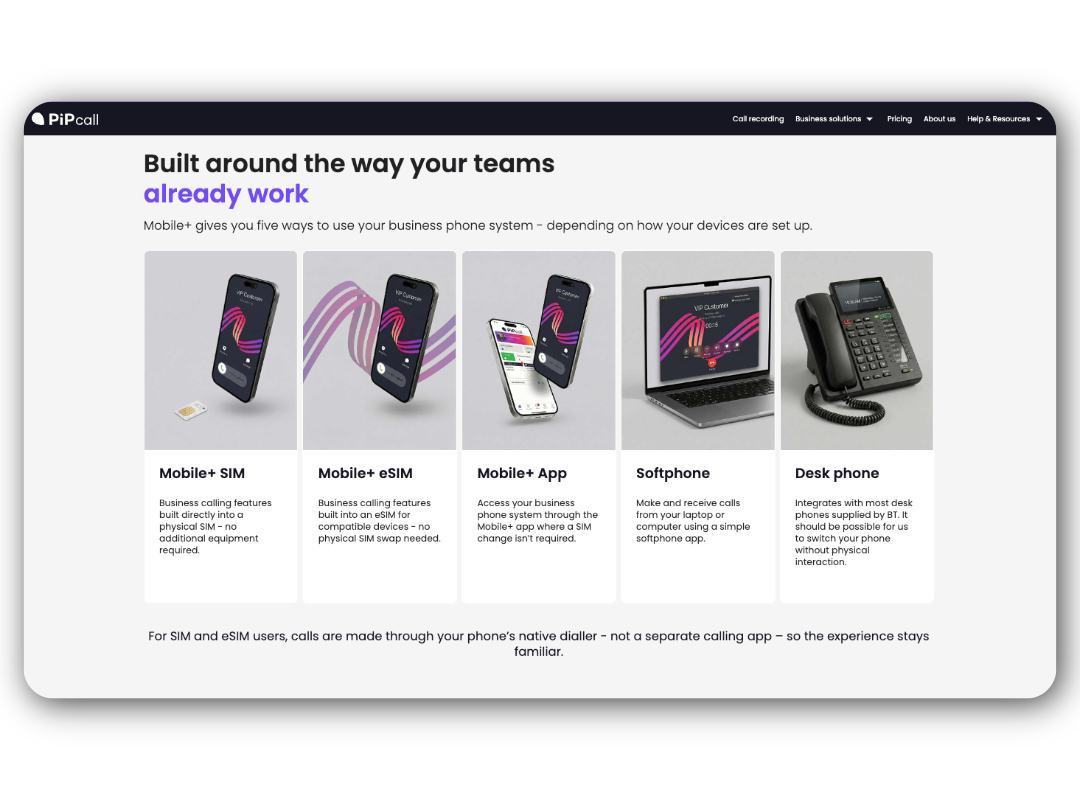
PiPcall Mobile+ is a strong fit for field operations and other businesses where the mobile phone is the main work device.
It is designed for organisations that want business telephony features such as routing, recording, shared numbers and call handling to work alongside mobile calling, without forcing users into a desk-first or softphone-first experience. That makes it particularly relevant for teams who spend most of their working day away from desks and need business calls to work simply and consistently on mobile.
PiPcall is especially relevant for site teams, supervisors, operatives, mobile service teams and other businesses where adoption matters just as much as features.
PiPcall Mobile+
Pros
- Strong fit for mobile-first and field-based use cases
- Helps reduce app friction for non-desk workers
- Strong fit for business identity, routing and mobile calling
- Relevant for mixed estates using app, SIM and eSIM models
Cons
- Less suitable if the main priority is a broader collaboration suite
- May need more explanation for buyers starting with generic VoIP language
Best for
Field operations, frontline teams, and businesses where the mobile itself is the core work device.
2. Vodafone One Net
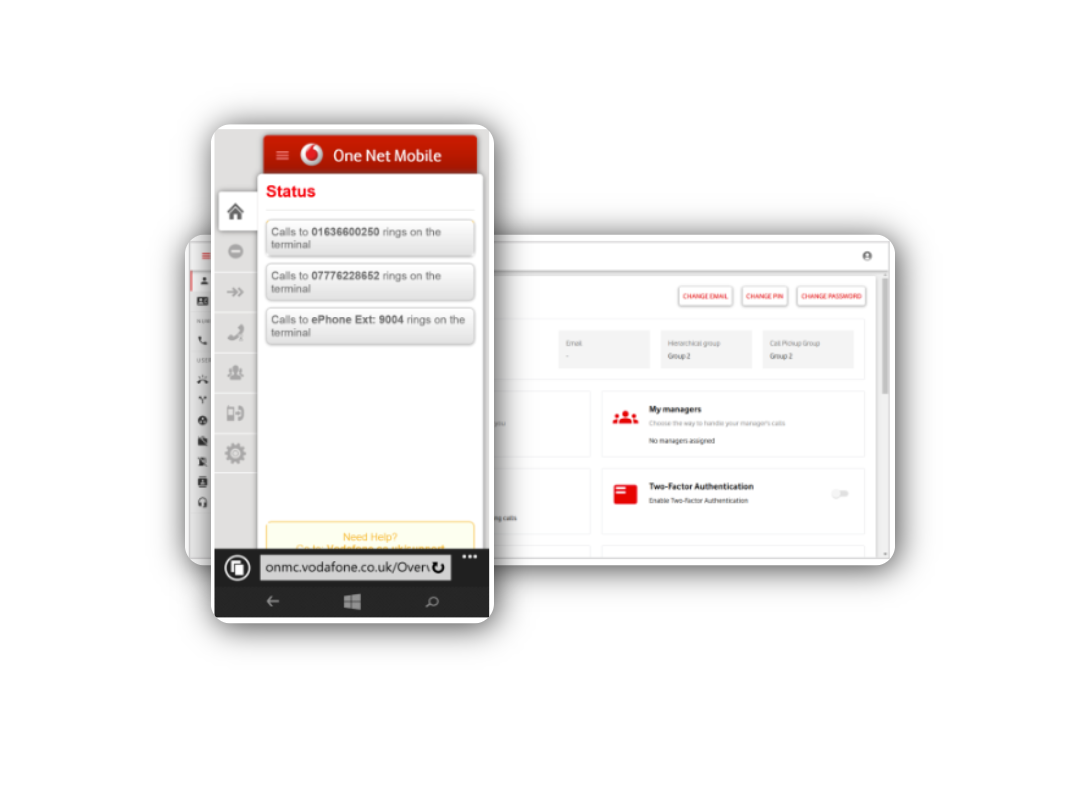
Vodafone One Net is a strong option for businesses that want operator-backed business telephony with wider communications capability.
It is especially relevant for organisations that want the reassurance of a major operator and need mobile calling to sit within a broader communications setup.
For some businesses, that wider scope is a strength. For others, especially very mobile or site-heavy teams, it may feel broader than necessary.
Vodafone One Net
Pros
- Major-brand familiarity
- Strong operator-backed communications proposition
- Good for businesses wanting wider UC features as well as mobile
Cons
- May feel broader than needed for field-heavy users
- Less tightly focused on mobile-native simplicity than specialist options
Best for
Businesses that want operator-backed business telephony plus wider communications features.
3. Gamma Connect
Gamma Connect is a good fit for businesses that want mobile capability within a broader communications environment.
It is particularly relevant where voice, collaboration and wider business communications need to work together, rather than where the sole priority is a simple field-phone-system setup.
For businesses with mixed teams or broader communications requirements, Gamma can be a strong option.
Pros
- Strong business telephony heritage
- Good fit for broader communications environments
- Credible option for businesses wanting converged communications
Cons
- Less immediately intuitive than household software brands
- Can feel more platform-led than field-led
Best for
Businesses that want mobile capability within a broader communications environment.
4. BT One Phone
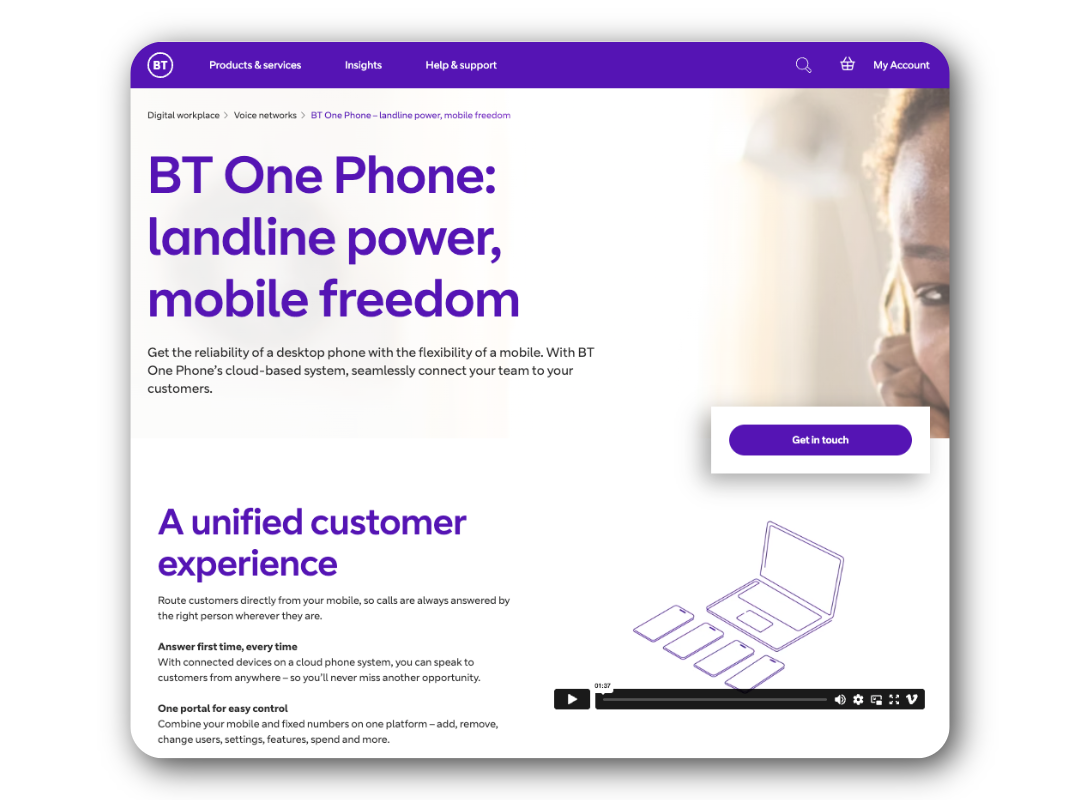
BT One Phone belongs here as a benchmark only.
It remains a useful reference point because many readers, especially existing BT customers, still recognise it as a model for mobile business telephony. That makes it helpful as a comparison point when looking at newer alternatives.
It should not, however, be treated as a current recommendation.
BT One Phone
Pros
- Familiar benchmark for current and former users
- Useful comparison reference for mobile business telephony
Cons
- Legacy service
- Not a current recommendation
Best for
Baseline reference point only.
Where app-based VoIP platforms fit
App-based UCaaS vendors still have a place.
For desk-based, hybrid and collaboration-heavy teams, platforms like Zoom Phone, RingCentral and Teams Phone can make a lot of sense. They are often strongest when the business values:
- meetings
- chat
- desktop workflows
- integrations
- one app across devices
That is a different requirement from giving reliable, low-friction business calling to field, desk-less and frontline teams.
Which option is best for field, desk-less and frontline teams?
For these workforces, the strongest shortlist is usually:
- PiPcall Mobile+
- Vodafone One Net
- Gamma Connect
Choose PiPcall Mobile+ if:
- mobiles are the main work device
- teams need easy adoption
- business identity and call handling matter
- you want less reliance on softphones
Choose Vodafone One Net if:
- you want a major operator
- the business also needs broader UC features
- you have a mixed workforce rather than a purely field-based one
Choose Gamma if:
- mobile needs to sit within a broader communications setup
- the business wants converged business communications
- the workforce model is mixed rather than purely field-based
Do field and frontline teams need a VoIP app?
Not always.
For many field and frontline teams, a VoIP app is exactly where adoption problems begin. If workers ignore the app, miss calls, switch back to their normal dialler, or avoid more complex workflows, the system may look good on paper but work less well in practice.
That is why app dependency should be treated as a strategic choice, not a default assumption.
PiPcall and ONSIM are both relevant here because they represent a different model: business calling built around mobile use, rather than relying on a standard softphone experience.
FAQs
What is the best phone system for field teams?
Usually, it is the one that works reliably for people away from desks, supports business identity, and is easy to adopt on mobile. For many field teams, that points more toward mobile-first business telephony than generic desktop-style VoIP.
Is VoIP good for frontline teams?
It can be, but only if the setup fits the workforce. App-led VoIP may suit some mixed or office-heavy teams. For field-based and desk-less teams, a more mobile-first model can be a better fit.
Do field teams need a VoIP app?
No. Some do, but many do not. The better question is whether app dependency helps or hinders adoption for your workforce model.
Can frontline businesses use a mobile-first business phone system?
Yes. That is exactly where providers such as PiPcall and ONSIM are most relevant.
What is the difference between mobile UCaaS and VoIP for field teams?
The main difference is that mobile UCaaS is more likely to treat the mobile itself as the primary business communications layer, while standard VoIP often assumes an app-led experience.
Final summary
The best mobile VoIP alternative depends less on generic VoIP features and more on how your workforce actually works.
For desk-based and collaboration-heavy teams, app-based cloud calling may be perfectly suitable.
For field teams, desk-less workers, frontline staff and mobile-first operations, the better answer is often a setup built around reliable mobile use, simple adoption, business identity and strong call handling.
That is why the strongest shortlist for this page is:
- PiPcall Mobile+
- Vodafone One Net
- Gamma Connect
- BT One Phone as the legacy benchmark only