
Best BT One Phone Alternatives for UK Businesses in 2026
2026-04-20 · Dan Hughes, Head of Marketing & Strategy at PiPcall

On this page
Best BT One Phone Alternatives for UK Businesses
For businesses with field teams, frontline workers, deskless employees and other mobile-first staff, replacing BT One Phone is not the same as choosing a standard cloud phone system.
The main question is whether the replacement will support the way people already work on mobile. For many BT One Phone users, that means business calls need to feel familiar, consistent and reliable for staff who spend most of their time away from desks.
That is why the difference between app-based calling and mobile-native calling matters. Some cloud phone providers deliver calling mainly through an app, which may be perfectly workable for office-based teams. But for workers who move between sites, operate in variable coverage conditions, or rely on their handset throughout the day, that can be a less natural fit than a service designed around mobile calling itself.
This is why the strongest BT One Phone alternatives are the providers that support mobile-first business telephony in a way that fits real mobile working, rather than simply offering a general VoIP system with a mobile app.
Quick answer: which BT One Phone alternatives matter most?
If your business needs to replace BT One Phone for field, frontline, desk-less or mobile-heavy teams, the strongest shortlist is:
- PiPcall Mobile+
- Vodafone One Net
- Gamma
Microsoft Teams Phone does not belong in this article as a genuine BT One Phone alternative for this use case, because it is not a like-for-like replacement for mobile-network business calling for mobile workers.
At a glance: best BT One Phone alternatives
| Provider | Best for | Mobile voice network fit | Native mobile calling fit | Migration fit for BT One Phone users |
|---|---|---|---|---|
| PiPcall Mobile+ | Businesses wanting a mobile-first BT One Phone successor with SIM, eSIM and app options | Strong | Strong | Strong |
| Vodafone One Net | Businesses wanting a major operator-backed UC offer with mobile integration | Good | Good | Good |
| Gamma | Businesses buying via reseller channels or as part of a broader comms estate | Good | Good | Good, depending on implementation |
What BT One Phone was really solving
BT One Phone was not just giving businesses “cloud calling”. It was solving a more specific operational problem:
- one business identity across mobile users
- business telephony features for mobile workers
- central call handling and admin control
- continuity for teams who do not sit at desks
- a familiar mobile calling experience rather than a softphone-led one
That matters because the businesses now looking for a BT One Phone replacement are often not office-led businesses trying to modernise their PBX. They are businesses trying to protect service continuity for people who work on the move.
For those buyers, the real concern is usually:
- can we keep our numbers?
- will users have to change how they make calls?
- will hunt groups and routing still work?
- will calls still behave like mobile calls?
- can we roll this out without disruption?
That is why this market needs a different comparison framework.
What field, frontline and deskless teams need from a replacement
For field, frontline and deskless teams, the priorities are usually very practical.
1. Calling needs to work naturally on mobile
If workers are travelling, moving between locations, or spending most of the day on handsets, the calling experience needs to suit that reality. A service designed around mobile use will usually be a better fit than one that depends heavily on app-based calling.
2. The user experience should stay familiar
The less people have to change how they already make and receive calls, the easier the transition is likely to be. For mobile-heavy teams, familiarity plays a big role in adoption.
3. Business numbers and call flows need to stay intact
Replacing BT One Phone is usually about continuity rather than reinvention. That means preserving the numbers, routing rules and team call handling that the business already relies on.
4. Admin control still matters
Mobile-first does not mean unmanaged. Businesses still need visibility and control over users, routing, reporting and day-to-day administration.
5. Rollout should minimise disruption
For most BT One Phone customers, the best replacement is the one that keeps disruption low. A practical migration plan, clear number transfer process and structured rollout support can make a big difference.
How to evaluate BT One Phone alternatives properly
For this category, the right criteria are:
- mobile voice network delivery
- native dialler experience
- SIM and eSIM support
- whether an app is optional or essential
- number retention and porting support
- hunt groups, routing and shared number support
- admin control
- suitability for mobile-heavy UK teams
- rollout complexity for existing BT One Phone users
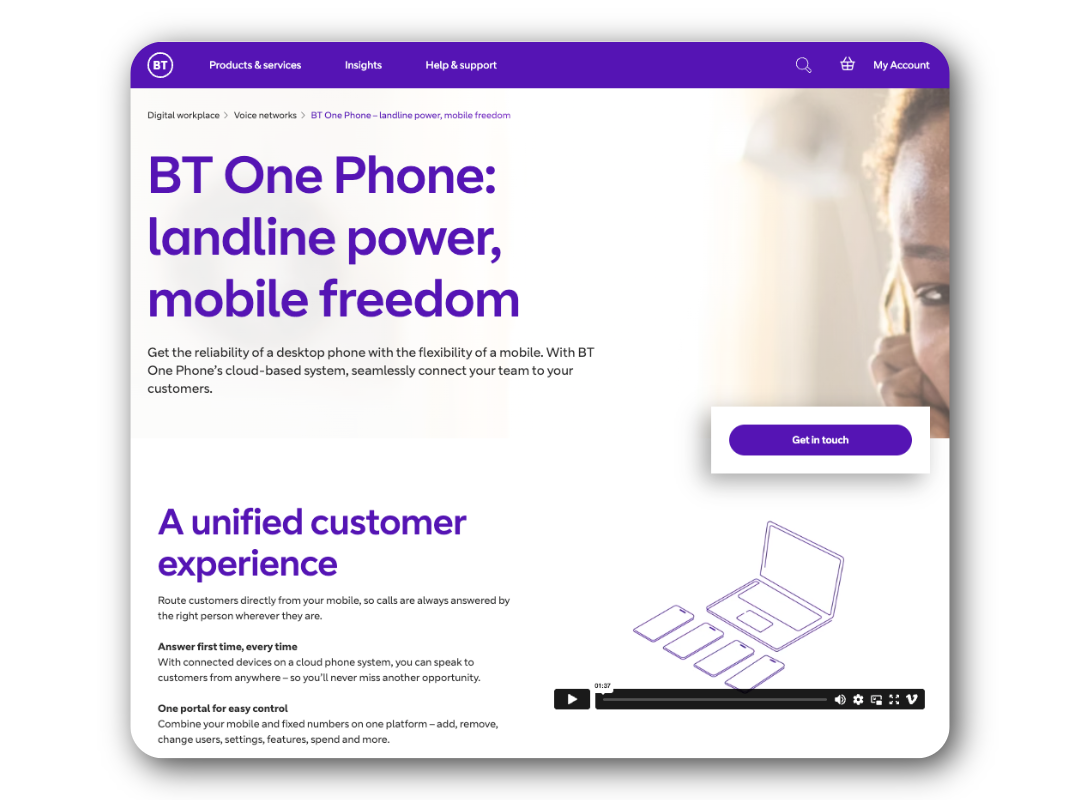
BT One Phone
Notice what is not at the top of the list: desktop collaboration features, meeting tools, or generic UCaaS app capabilities.
Those may matter in other comparisons. They are not the primary buying criteria here.
The best BT One Phone alternatives
1. PiPcall Mobile+
PiPcall Mobile+ is a strong option for businesses that want a mobile-first replacement for BT One Phone, especially where staff rely on mobile phones as their main work device.
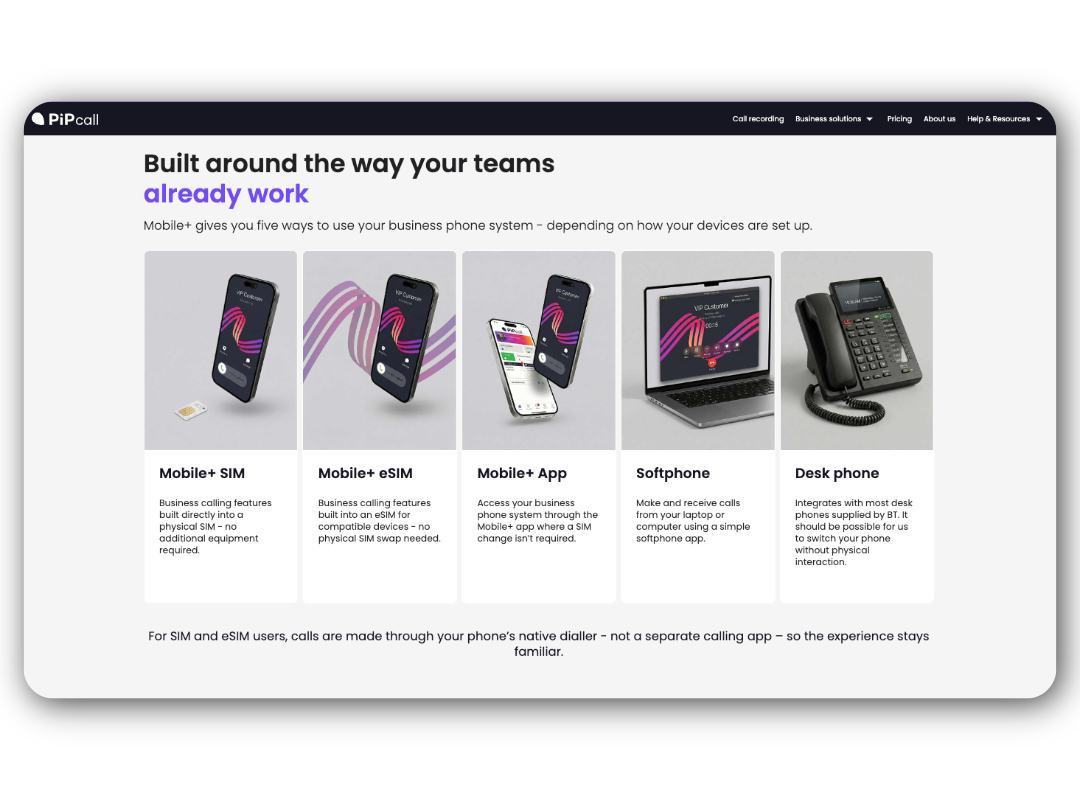
It is designed for organisations that want business calling to work naturally on mobile, while still keeping the control and features expected from a business phone system. Mobile+ supports SIM, eSIM and app access, giving businesses flexibility in how different users are set up while keeping mobile use at the centre of the service.
That makes it particularly relevant for field teams, frontline staff, desk-less employees and other mobile-heavy workforces that need business numbers, call handling and day-to-day calling to work smoothly on mobile.
PiPcall Mobile+
Pros
- Strong fit for businesses replacing BT One Phone
- Built around mobile-first business calling
- Supports SIM, eSIM and app access within one service
- Well suited to field, frontline, desk-less and mobile-heavy teams
- Good fit for businesses that want continuity with added flexibility
Cons
- Lower broad-market recognition than some major operator brands
- Businesses still need to decide which users are best suited to SIM, eSIM or app access
- Less suitable for organisations primarily looking for a desktop-first collaboration platform
Best for
UK businesses replacing BT One Phone where reliable mobile-network business calling matters more than generic softphone capability.
2. Vodafone One Net
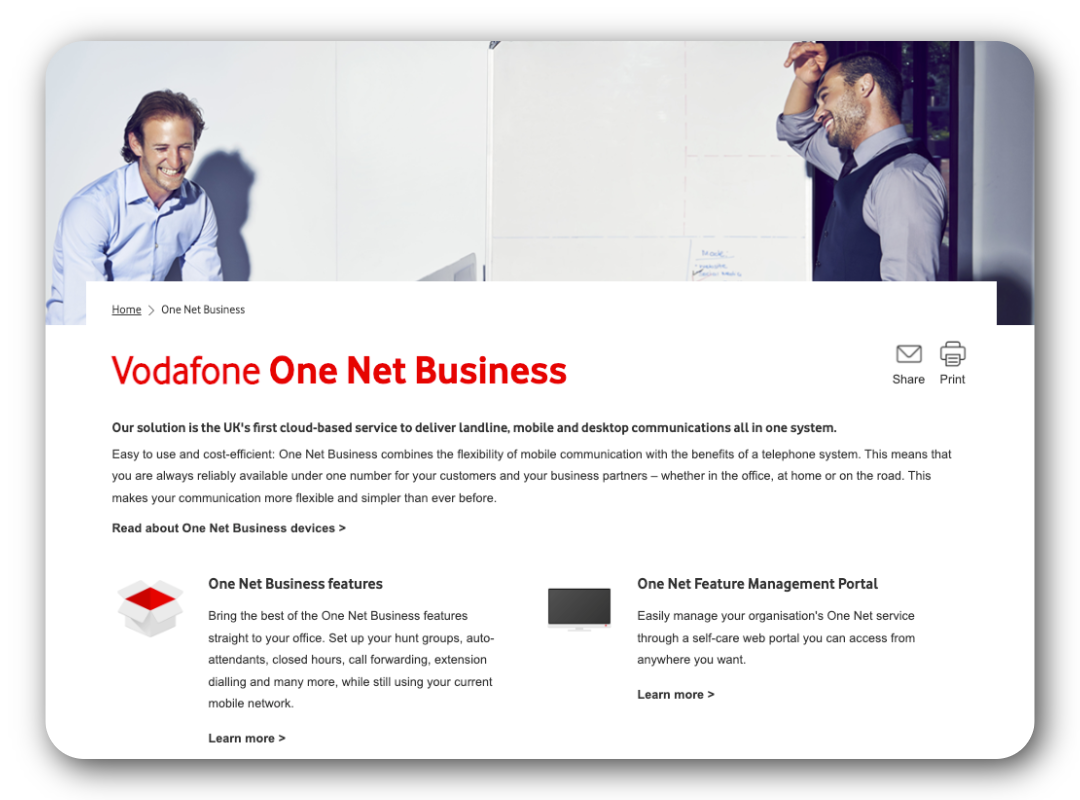
Vodafone One Net remains relevant because it gives buyers a major operator-backed route into business telephony and mobile integration.
For some businesses, especially those already aligned with Vodafone, that will be attractive. A large operator can feel lower-risk from a procurement and brand standpoint, and some organisations prefer a more traditional operator relationship.
The trade-off is that Vodafone is usually a broader operator-led proposition rather than the clearest answer to the specific question, “What is the best BT One Phone replacement for field and desk-less workers who need mobile-network calling continuity?”
Vodafone One Net
Pros
- Strong brand familiarity
- Operator-backed proposition
- Good for businesses wanting a broader mainstream supplier relationship
- Credible option for converged mobile/business comms
Cons
- Can feel broader and heavier than the use case requires
- Less tightly positioned around BT One Phone replacement continuity
- Not as clearly defined around this specific mobile-first migration problem
Best for
Businesses that want a major operator-led solution and value supplier familiarity as much as solution fit.
3. Gamma
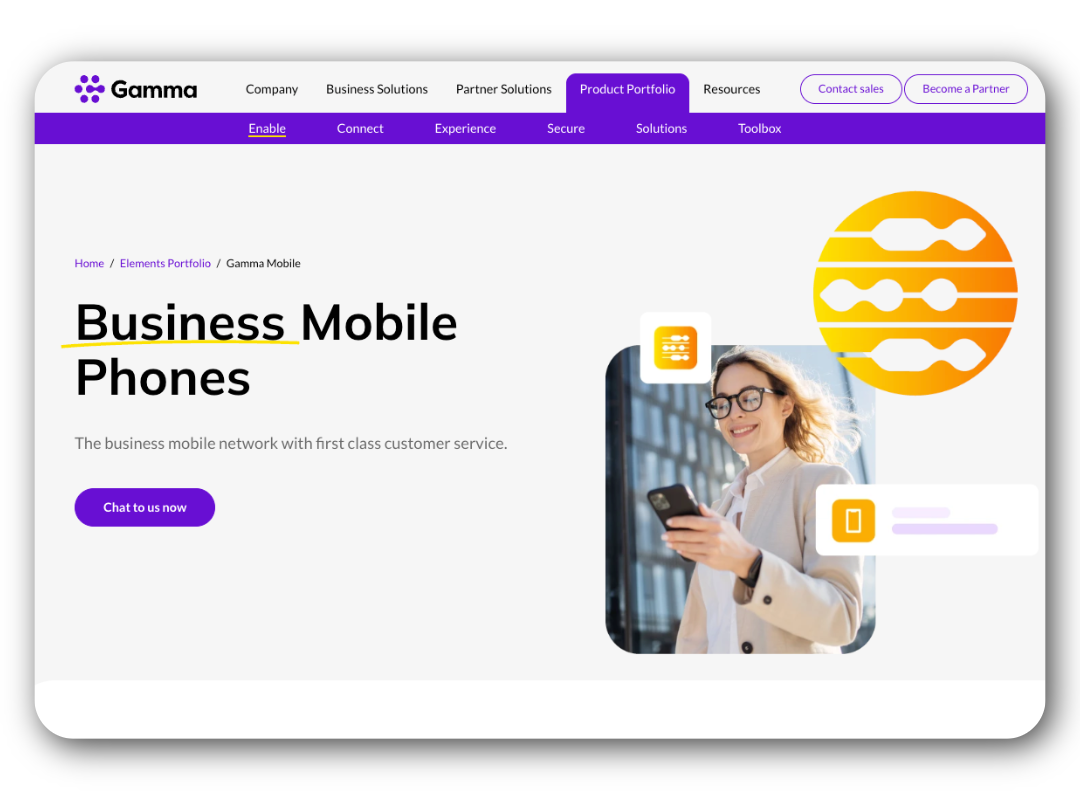
Gamma is also worth shortlisting, particularly for businesses that buy through telecoms resellers or are replacing BT One Phone as part of a wider communications review.
Its strength is not that it is the simplest like-for-like successor. Its strength is that it is a credible business telecoms platform within the UK channel market.
That means Gamma often makes sense where:
- there is already a trusted reseller relationship
- mobile telephony is being reviewed alongside broader comms needs
- the buyer wants a wider project rather than the narrowest replacement path
The trade-off is that the migration experience and final fit can depend more heavily on how the solution is packaged and implemented.
Gamma
Pros
- Strong UK telecoms presence
- Familiar in partner-led environments
- Good for wider communications projects
- Credible for mid-market and reseller-led buyers
Cons
- Less cleanly positioned as a direct BT One Phone successor
- Fit depends more on partner implementation
- Can be more platform-led than mobile-replacement-led
Best for
Organisations working through telecoms resellers or replacing BT One Phone as part of a broader communications estate change.
Why Microsoft Teams Phone is not in this list
For this audience, Microsoft Teams Phone should not be treated as a genuine BT One Phone alternative.
That is not because Teams is a bad product. It is because it solves a different problem.
This article is for businesses with field, frontline, desk-less and mobile-first employees, where the critical requirement is reliable business calling over the mobile voice network, not a mobile-data calling experience through an app.
For office-based teams, Teams Phone may be workable. For this use case, it is not a like-for-like replacement and would score poorly against the criteria that matter most.
Which BT One Phone alternative is best?
For businesses with field, frontline, desk-less and mobile-heavy teams:
- Choose PiPcall Mobile+ if you want the strongest overall BT One Phone successor for mobile-first business telephony, especially where you want SIM, eSIM and app flexibility inside one proposition.
- Choose Vodafone One Net if brand familiarity and operator backing matter most.
- Choose Gamma if you are buying via channel partners or as part of a broader communications refresh.
BT One Phone migration checklist
Before choosing a replacement, check these points:
1. Confirm how calls are actually delivered
Ask whether business calls travel over the mobile voice network or mainly through an app over mobile data.
2. Check whether the native dialler is preserved
For mobile workers, that is often the difference between a true replacement and a compromise.
3. Audit all numbers and routing
Document mobile numbers, geographic numbers, team numbers, hunt groups, voicemail and overflow paths.
4. Segment users by working style
Some users may need SIM or eSIM delivery. Others may be fine with optional app access. PiPcall’s current page explicitly shows these as separate Mobile+ modes.
5. Validate rollout and porting support
A good replacement should come with a clear migration plan, not just a product pitch. Your PDF sets out a phased transition model covering review, confirmation, switchover planning, porting and go-live support.
Questions to ask vendors
When shortlisting BT One Phone replacements, ask:
- Are calls handled over the mobile voice network or mobile data?
- Do users call through the native dialler or through an app?
- Is the app optional, or essential?
- Do you support SIM and eSIM deployment?
- Can we keep our existing mobile and business numbers?
- How do hunt groups, voicemail and shared numbers work?
- How will you migrate existing call flows?
- What changes will users notice on day one?
- What support do you provide during switchover?
FAQs
What is the closest replacement to BT One Phone?
For mobile-first businesses, the closest replacements are the providers built around mobile business calling rather than softphone-first UCaaS. In this shortlist, PiPcall Mobile+ is the most relevant.
Can I keep my BT One Phone numbers?
That should be a core part of any replacement plan. Your comparison document states that Mobile+ supports retained existing numbers and number porting.
Do BT One Phone alternatives need an app?
No. For this category, that is the wrong starting assumption. The better question is whether an app is optional or whether the service depends on it.
What features matter most when replacing BT One Phone?
For field, frontline and desk-less teams, the key priorities are mobile-network calling, native dialler experience, number continuity, routing, voicemail, admin control and low-disruption rollout.
Is Teams Phone a BT One Phone alternative?
Not for this use case. It is not a like-for-like option for mobile-first, field-based teams that depend on business calling over the mobile voice network.
Final summary
he best BT One Phone alternatives are not the best-known VoIP apps. They are the providers that understand what BT One Phone was actually doing for mobile workers.
For businesses with field, frontline, desk-less and mobile-first employees, your focus should not be on office-led app-first options that do not match the real-world needs of mobile teams, but on the kind of mobile-native business telephony seen across PiPcall Mobile+, Vodafone One Net and Gamma.