
Construction Disputes Don’t Start in Contracts. They Start in Conversations
2026-01-19 · Mel Webber, PiPcall Solutions Expert
On this page
Download the eBook: The Construction Communication Gap
Construction Disputes Don’t Start in Contracts. They Start in Conversations.
Construction projects run on conversations.
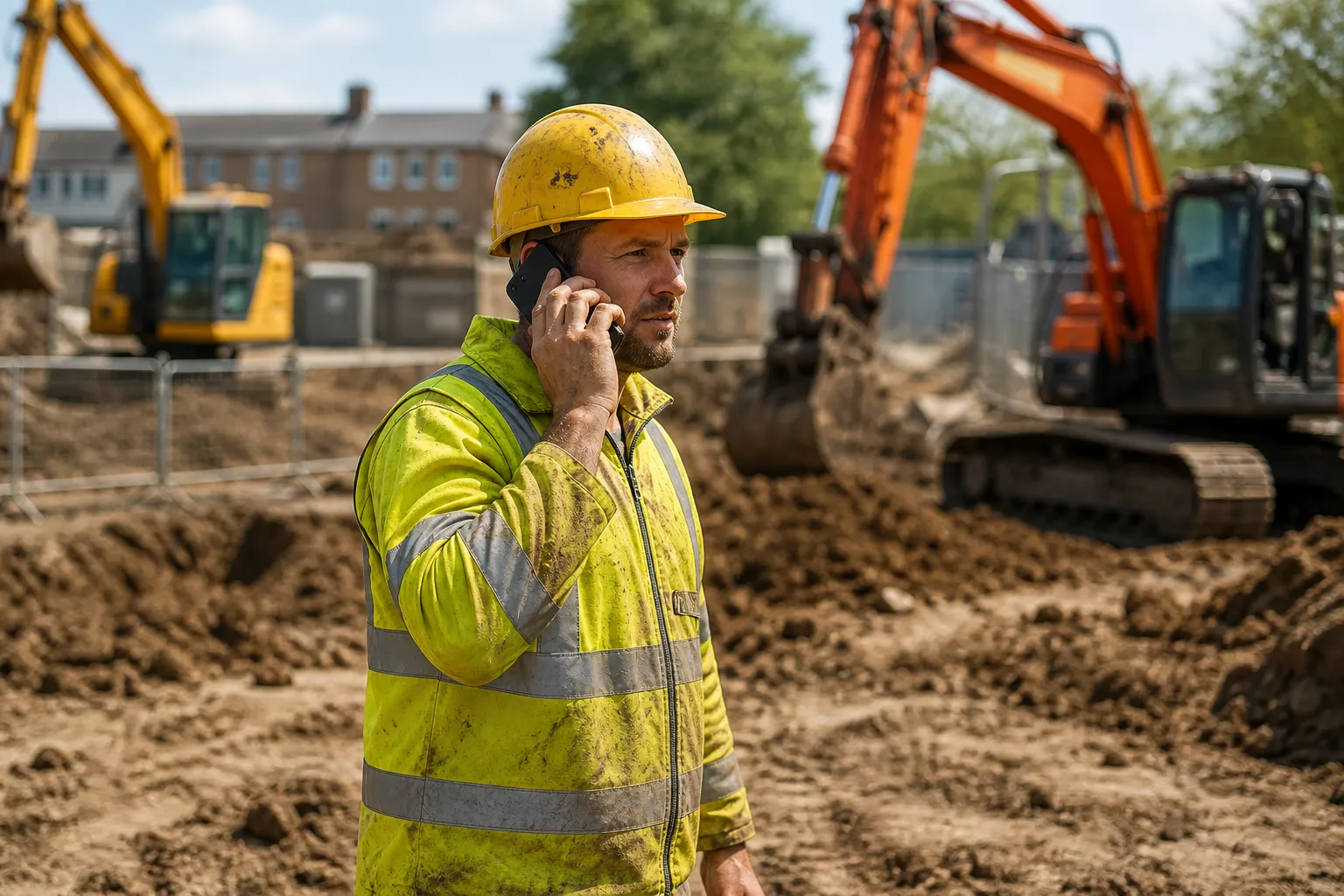
Every day, site managers, supervisors, subcontractors and commercial teams make decisions over the mobile phone to keep work moving. A variation is agreed verbally. A sequencing change is confirmed on the way between sites. A safety control is discussed quickly so work can restart.
At the time, these conversations feel practical and necessary. Months later, they often sit at the centre of disputes, claims, and investigations.
The issue is not that people talk. The issue is that mobile calls are rarely treated as operational records, despite the role they play in shaping outcomes.
Where disputes really begin
Most disputes don’t start with bad intent or deliberate non-compliance. They start when informal decisions made under pressure are later viewed through a legal or commercial lens.
When a dispute escalates, the questions are predictable:
- What exactly was agreed?
- Who authorised it?
- When did the conversation take place?
- Was cost, time, or safety discussed?
- Was it challenged or accepted?
Emails and site diaries may help, but they often only capture part of the picture. The most important decisions are frequently made verbally — and those conversations are some of the hardest to reconstruct accurately after the event.
The hidden risk in mobile calls
Mobile phones have become the primary coordination tool on site. They are fast, direct, and flexible. But they also create blind spots:
- Calls are rarely recorded consistently
- Records are fragmented across devices
- Evidence relies on memory rather than facts
- Subcontractors and mixed devices add complexity
When disputes arise, this lack of clarity doesn’t just slow resolution, it can weaken negotiating positions, increase costs, and prolong disruption.
Yet mobile calls are often still treated as informal side channels, rather than part of the project record.
From informal conversations to operational records
Forward-thinking construction teams are starting to rethink this.
Instead of asking “how do we record everything?”, they are asking a more practical question:
“What would good look like if we treated key conversations as operational records?”
At a high level, good practice has three elements:
- Capture – Work-related calls are captured consistently, without relying on individuals to remember or change behaviour.
- Control – Recordings are stored centrally, with clear governance, access controls, and audit trails.
- Learn – Conversations can be reviewed, searched, and analysed to improve clarity, reduce repeat issues, and support better decision-making.
This approach does not replace formal contract administration. Instead, it supports it by improving the quality and availability of contemporaneous records.
Why this matters now
Disputes are costly, time-consuming, and disruptive. But many of the risks that lead to them are visible much earlier, if teams have the right level of insight into how decisions are being made and communicated.
Mobile calls sit at the intersection of delivery, safety, and commercial risk. Treating them as operational assets rather than unmanaged risk can:
- Improve clarity around verbal instructions
- Support faster, more accurate dispute resolution
- Reduce reliance on recollection under pressure
- Strengthen confidence in project records
It’s not about surveillance or blame. It’s about clarity.
A practical guide to managing verbal instructions
To explore this in more detail, we’ve created a practical eBook that connects real-world construction scenarios with dispute risk — and shows what good looks like when managing mobile conversations properly.
The guide covers:
- The call scenarios most likely to create risk
- Why verbal instructions are hard to evidence later
- How disputes typically unfold from a commercial perspective
- What best practice looks like in managing mobile calls
- How tools such as Mobile+ can support this approach in practice
If you’re involved in project delivery, commercial management, or dispute avoidance, it’s designed to be useful rather than theoretical.